pine rows, privet & red clay
Free quotes for forestry mulching, lot clearing, brush removal, stump grinding, and grading — connected straight to a local CSRA operator.
Fifteen ways to take ground back — mulched in place wherever possible, hauled and graded where the job calls for it.
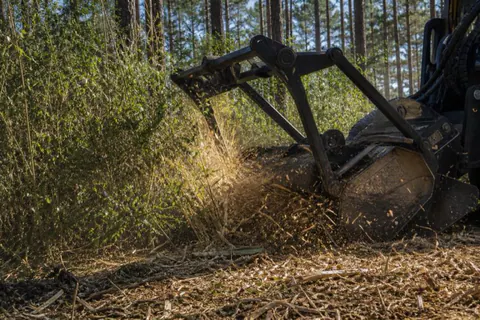
One machine grinds privet, saplings, and small pine where they stand — no burn piles, no haul-off, just a chip carpet over clean ground.
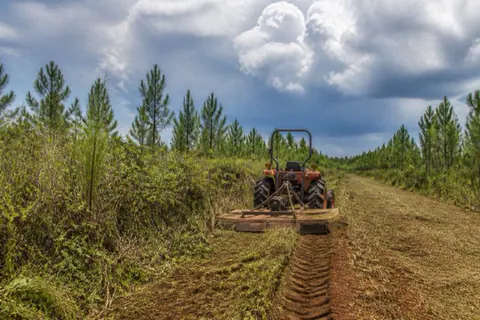
Bush-hogging and understory cutting that takes a parcel from impassable back to walkable — broomsedge, briars, and thicket gone.
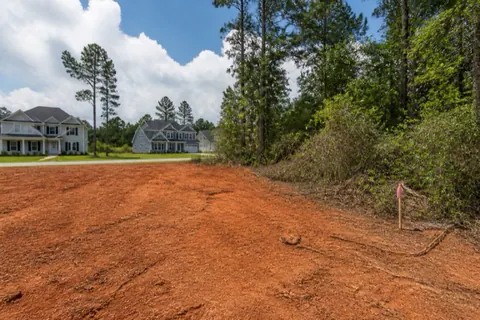
From wooded parcel to build-ready ground in Augusta's growth corridors — trees down, stumps out, pad area grubbed and rough graded.
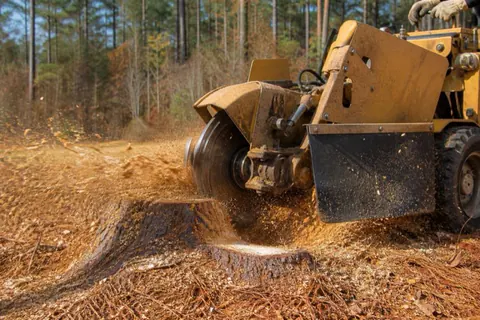
Loblolly, oak, and sweetgum stumps ground below grade so you can mow, plant, or pour over ground that used to fight back.
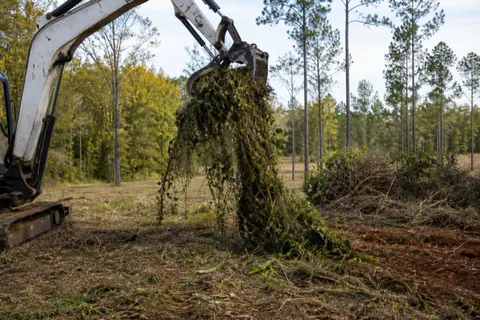
The CSRA's two worst land-grabbers pulled out by the roots — fence corners, ravines, and creek lines handed back to their owners.
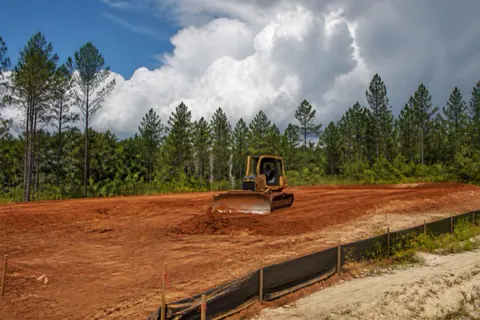
Pads, driveways, and drainage shaped into fall-line dirt — cut, fill, and compaction matched to red clay or river sand.
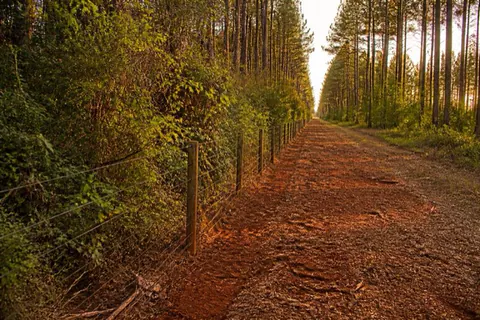
Fence rows mulched back to a clean corridor — wire found, posts saved where possible, and a line you can actually maintain again.
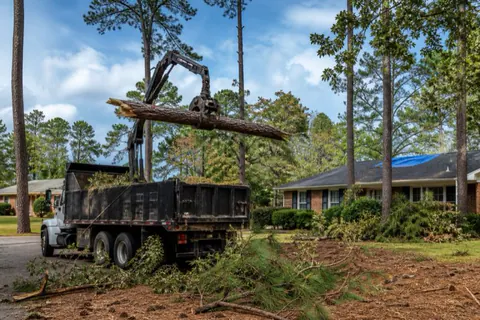
Downed pines cut, grappled, and hauled after CSRA storms — yards opened up, hangers brought down safely, debris actually gone.
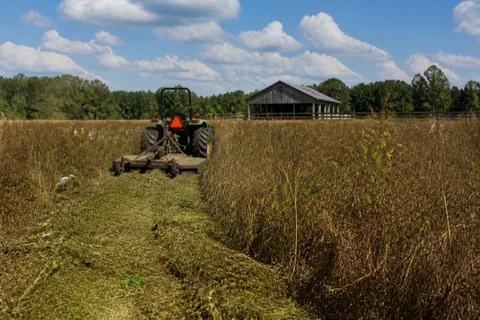
Grown-up fields in Burke, McDuffie, and Aiken counties mowed, mulched, and smoothed back into grass that carries stock again.
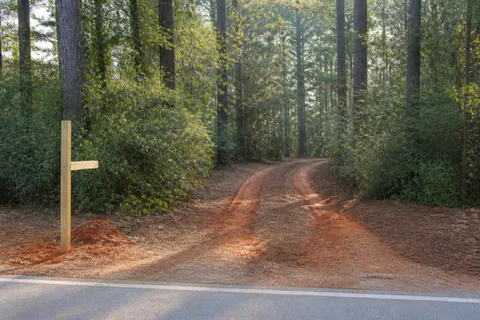
New drives and woods roads cut through pine and privet — corridor mulched, grade shaped, culverts set, ready for stone.
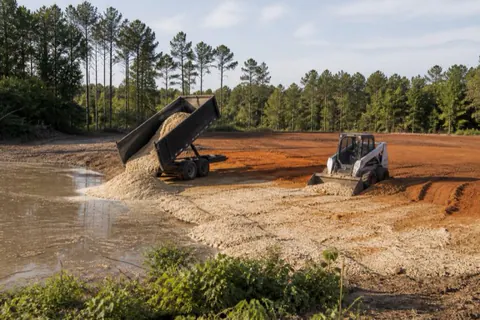
Fill hauled, spread, and compacted to fix low spots, raise pads, and level CSRA ground — the right dirt in the right lifts.
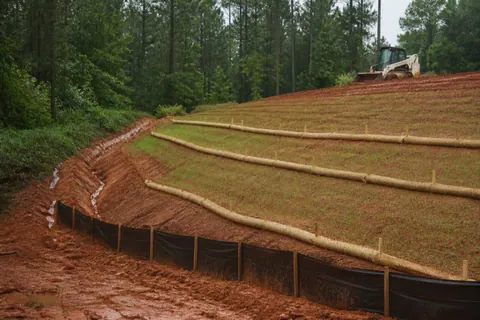
Gullied slopes regraded, wattles and silt fence set, and grass established — stopping fall-line clay before it leaves the property.
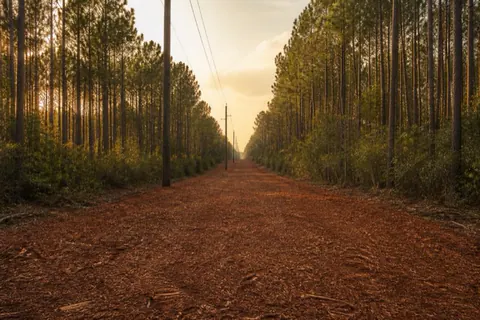
Utility easements, pipeline corridors, and road frontage held to spec with mulching crews — straight, low, and on schedule.
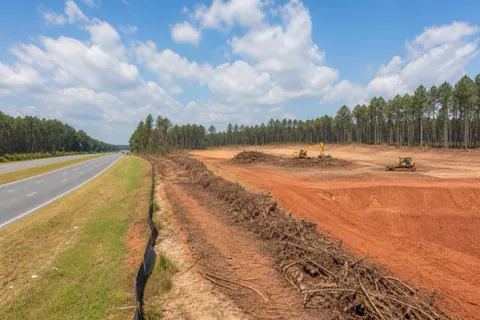
Multi-acre clearing for CSRA commercial and industrial builds — sequenced with erosion control, haul-off, and the project schedule.
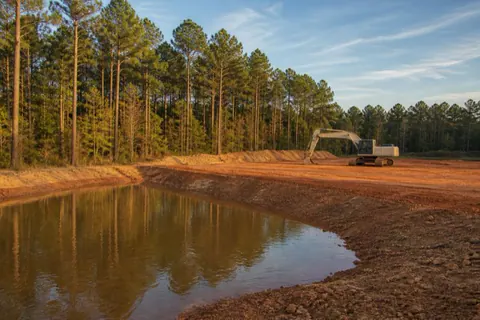
The dirt phases that turn raw acreage into buildable CSRA sites — ponds, pads, roads, and stabilization handled as one scope.

The CSRA straddles the fall line: Piedmont clay on the uplands, coastal-plain sand toward the Savannah. Machines, ground pressure, and erosion control get matched to which side of that line your parcel sits on.
CSRA Clearing Pros connects Augusta-area property owners with a local land clearing contractor for forestry mulching, lot and acreage clearing, stump grinding, grading and site prep, and storm cleanup. The methods fit fall-line ground: drum mulchers that turn Chinese privet and sweetgum regrowth into a chip carpet instead of burn piles, root rakes and grapples for kudzu-swallowed fence corners, ground-pressure-matched track machines for both red-clay uplands and sandy river-side loam, and silt fence set before Georgia's afternoon thunderstorms test a freshly graded slope.
Augusta counted 202,071 people at the 2020 census, anchoring Georgia's second-largest metro — about 611,000 across the river region. The city sits exactly on the fall line of the Savannah River, and that geography runs through every clearing job: rust-red Piedmont clay on the high ground, pale sandy loam toward the floodplain, loblolly plantations in planted rows across both, and longleaf still holding the wiregrass ridges between them.
The growing season does not take days off. Roughly 44 inches of rain a year and around 82 days above 90°F push Chinese privet, kudzu, and sweetgum regrowth at a pace that swallows a fence line in two summers and an untended lot in five. Hurricane Helene made the other argument in September 2024, when gusts near 100 mph dropped a staggering share of the metro's tree canopy and left debris piles measured in the millions of cubic yards.
Meanwhile the metro keeps building — Grovetown alone has more than quadrupled since 1990 — so raw wooded parcels in Columbia County become homesites, pastures in Burke County get reclaimed, and lake lots near Clarks Hill get opened up to the water. All of it starts with the same first step: somebody has to clear the ground properly.
Acreage, growth, and what you want it to become — takes two minutes by form or phone.
CSRA Clearing Pros hands your request to a land clearing contractor working your part of the CSRA.
A free on-site look, then an itemized quote — mulching, grubbing, grading, and haul-off each priced plainly.
Density decides it. National pricing guides put forestry mulching anywhere from about $600 an acre for light brush to $2,500 for thick, stemmy growth, while conventional clearing of heavily wooded ground can run $3,400 to $6,200 an acre once hauling is involved. A privet-choked half acre in Martinez and a wooded ten in Burke County are different jobs — the walk-through is what turns those ranges into one firm number.
Mulching grinds brush and small trees where they stand and leaves the chips as ground cover, so nothing gets hauled, burned, or piled, and the root mat that holds red clay in place stays put. A dozer strips to bare dirt, which is what a building pad needs but overkill for thinning an overgrown tract. Plenty of CSRA jobs use both: mulch the acreage, grub and grade only the footprint.
Cut once and walk away, and yes — both resprout from the roots. What changes the outcome is follow-through: mulching sets privet back hard, and a maintenance pass or a targeted herbicide treatment on the regrowth is what actually retires it. The quote can price a one-time cut or a knockdown-plus-maintenance plan, whichever fits the property.
Often not for keeping your own acreage in shape — bush-hogging, mulching underbrush, or reclaiming a fence line. Grading, work near creeks or wetlands, and anything tied to construction is another story, and Georgia's erosion rules can require silt fence and a land-disturbance permit. The contractor sorts the paperwork question for your parcel and county before any machine unloads.
On mulching jobs it stays as a chip layer that suppresses regrowth and feeds back into the soil — no burn piles, no dump runs. Where material has to leave, like storm timber on a small city lot, it gets hauled or staged for grapple pickup. Either way the plan for the debris is in the quote, not a surprise at the end.
Send the form or call, and your request goes straight to a local operator — not a national call center. Most walk-throughs get scheduled within a few days, and the quote itself is free with no obligation, whether it's a quarter-acre backyard in Evans or pasture outside Waynesboro.
free, no-obligation
 CSRA
CSRA